
Timeline of Events
- Home
- Timeline
Late 18th Century (c. 1790s)
Birth and Early Tribal Life
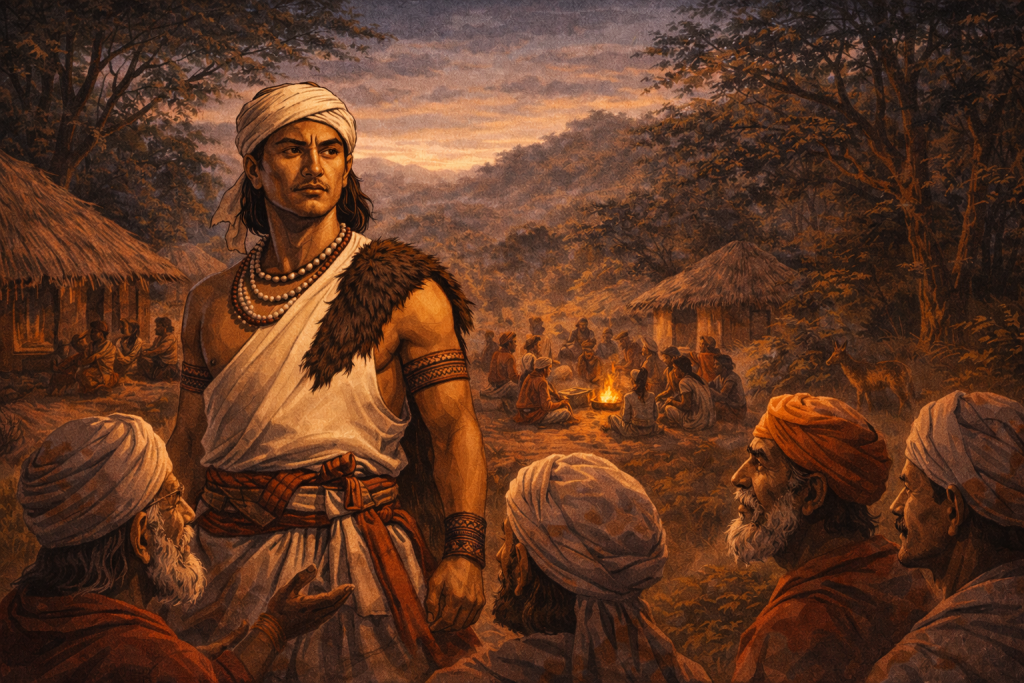
Dora Bisoi was born into a tribal society deeply rooted in forest life, collective customs, and ancestral traditions. His early years were shaped by close interaction with nature, community cooperation, and oral traditions passed down by elders. These formative experiences instilled in him a strong sense of belonging, responsibility, and respect for tribal laws. Life within the village revolved around shared labor, cultural rituals, and a deep spiritual connection to land and forests. Even as a child, Dora Bisoi witnessed the gradual intrusion of colonial authority into tribal regions, disrupting traditional systems of governance and resource use. These early observations planted the seeds of resistance in his mind. His upbringing laid the moral and cultural foundation that later defined his leadership—one grounded in service, unity, and defense of tribal autonomy rather than personal ambition.
Early 1800s (c. 1810–1815)
Emergence as a Tribal Leader
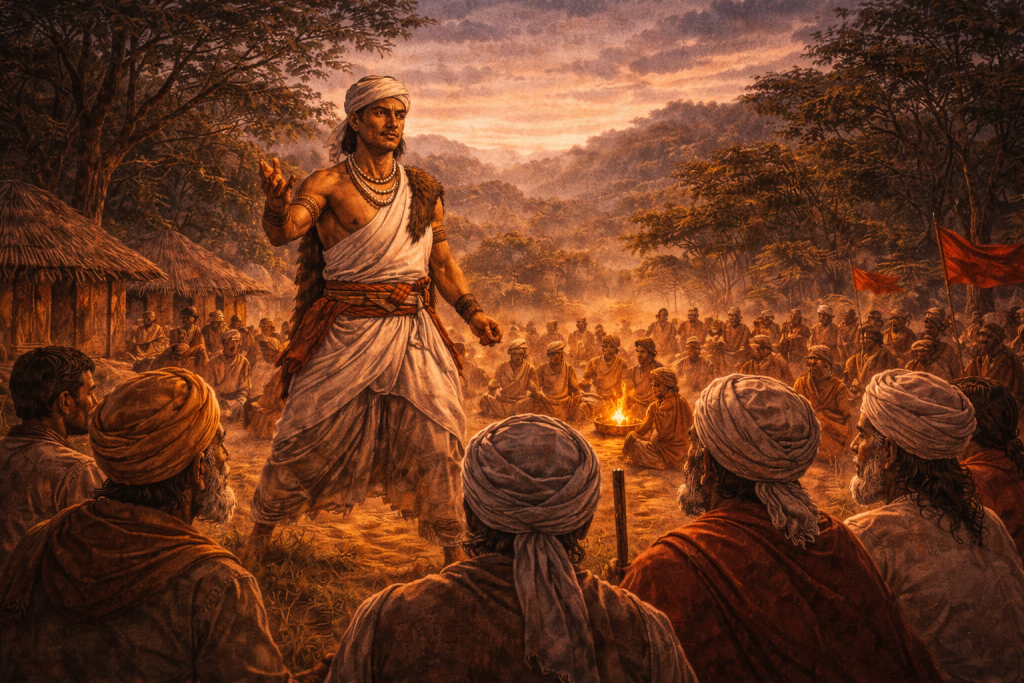
As colonial pressures intensified, Dora Bisoi gradually emerged as a trusted leader within his community. His ability to listen, mediate disputes, and articulate shared grievances earned him respect among elders and youth alike. Unlike imposed authority, his leadership grew organically through consensus and moral credibility. He became increasingly involved in organizing community discussions regarding land rights, forest access, and British interference in tribal governance. His deep understanding of tribal customs allowed him to unify diverse groups without disrupting social harmony. During this period, Dora Bisoi began to play a central role in coordinating village-level resistance, encouraging preparedness and collective decision-making. His leadership style—calm, inclusive, and principled—laid the groundwork for larger mobilization. This phase marked his transition from a community figure to a regional leader of resistance.
1817–1818
Leadership in the Ghumsar Uprising
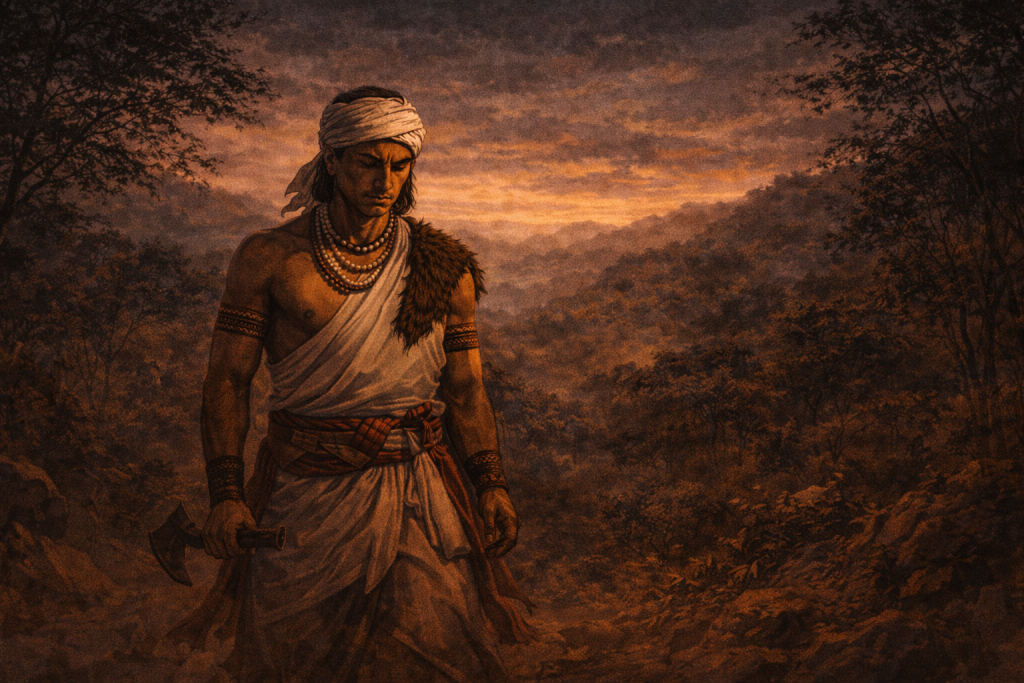
The Ghumsar Uprising marked the defining chapter of Dora Bisoi’s life. As British policies aggressively targeted tribal autonomy, he assumed a central leadership role in organizing coordinated resistance. He unified villages across the Ghumsar region, combining strategic planning with cultural legitimacy. His leadership emphasized discipline, collective defense, and protection of civilians. Utilizing intimate knowledge of terrain, forests, and movement routes, Dora Bisoi guided resistance efforts that challenged colonial authority without relying on reckless confrontation. The uprising represented not just armed resistance, but a moral assertion of tribal rights and dignity. Though the British eventually suppressed the movement, Dora Bisoi’s leadership left an indelible mark on regional history. The uprising became a symbol of tribal courage and organized defiance against colonial rule.
Post-1818
Suppression, Sacrifice, and Aftermath
Following the suppression of the Ghumsar Uprising, Dora Bisoi faced the harsh consequences of colonial retaliation. British forces sought to dismantle resistance networks, punish leaders, and reassert control over tribal territories. Despite defeat, Dora Bisoi’s conduct during this period reflected resilience and dignity. His sacrifice symbolized the cost of resistance borne by tribal leaders who challenged imperial power. Even as active resistance diminished, the ideals he championed—unity, autonomy, and cultural integrity—continued to circulate among communities. The aftermath of the uprising did not erase his influence; instead, it transformed his struggle into a source of inspiration and memory. His experience underscored the enduring imbalance of colonial power while reinforcing the moral legitimacy of tribal resistance.
(20th Century onward)
Post-Independence Recognition
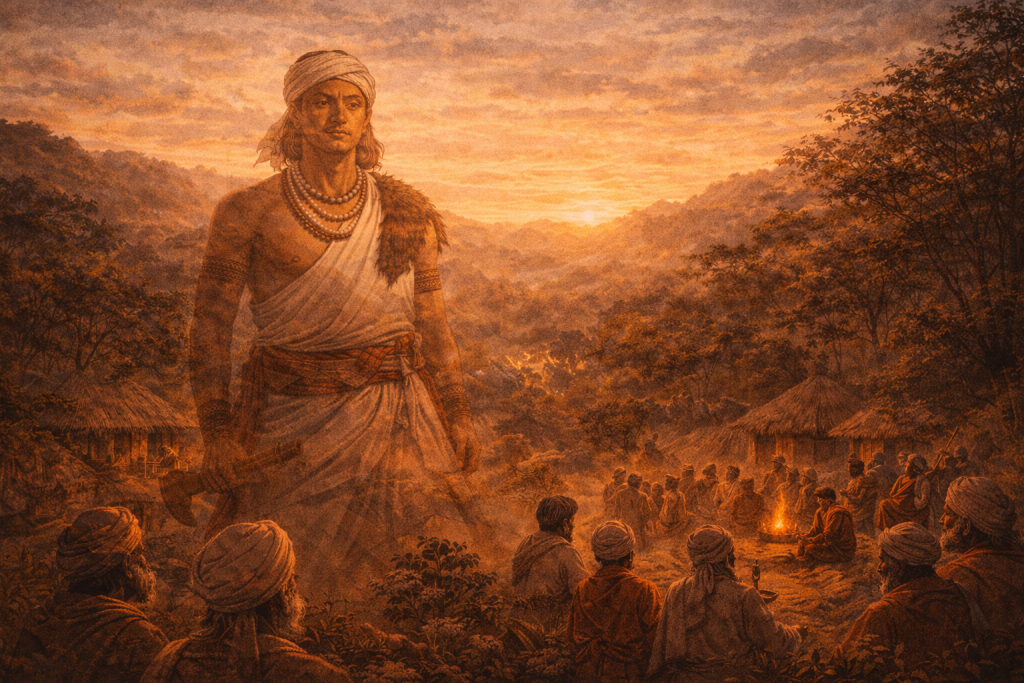
Long after his lifetime, Dora Bisoi’s legacy continued to shape Odisha’s tribal consciousness. Oral traditions preserved his story as a symbol of courage and leadership, ensuring that his struggle was remembered across generations. In post-independence India, scholars and regional histories gradually acknowledged his role in the broader freedom movement. Memorials, commemorations, and cultural tributes emerged to honor his contribution. His life came to represent not only resistance against colonial rule, but also the enduring strength of tribal identity. Today, Dora Bisoi stands as a reminder that India’s freedom was shaped by many voices, including those from tribal regions whose struggles were long marginalized. His legacy continues to inspire discussions on historical justice, indigenous rights, and cultural preservation.
Ghumsar Uprising
Dora Bisoi led organized tribal resistance in Ghumsar, challenging British authority through unity and strategy.
Forest Resistance
Tribal fighters used forest terrain and local knowledge to confront colonial forces and defend territory.
Village Defense Actions
Coordinated village defenses protected communities from colonial raids and reinforced collective tribal strength.
Protection of Sacred Lands
Battles were fought to safeguard sacred groves and ancestral lands from exploitative colonial policies.
Allied Tribal Engagements
Dora Bisoi supported joint actions with neighboring tribes, strengthening regional resistance against British rule.